Reporting a Pump and Dump: Evidence to Save and Who to Tell
On this page
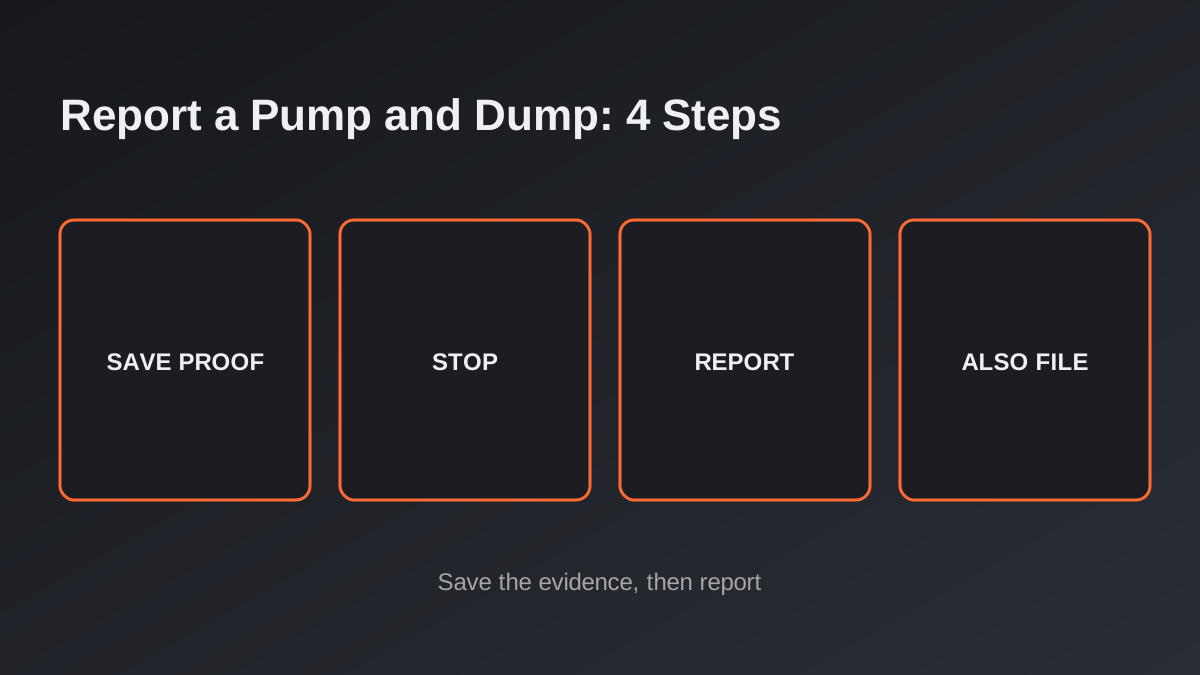
The short answer: report a pump and dump scheme to the SEC through its online tips and complaints form, and add FINRA if a brokerage firm or its employee was involved, your state securities regulator, and the FTC or FBI's IC3 if the promotion ran through ads, group chats or crypto. In the UK, use the FCA's "report a scam" page and Report Fraud; in India, SEBI's SCORES portal and cybercrime.gov.in. Before you report, save screenshots of the promotion, the group and your own trades, and do not send money to anyone who offers to "recover" your losses.
The topic is in the news again. On 21 October 2026 India's Enforcement Directorate said it had frozen trading accounts holding about Rs 200 crore and searched 29 premises in six cities as part of a money-laundering investigation into an alleged pump-and-dump operation involving two listed companies, NDTV Profit reported. The agency alleges that WhatsApp groups with names such as "Multibagger Stocks" circulated daily buy tips between December 2025 and February 2026 while preferential allottees sold into the extra demand. Those are allegations in an ongoing investigation; nobody has been found guilty. Earlier in the year, on 6 February 2026, the US Securities and Exchange Commission (SEC) issued an investor alert about stock-tip scams that start with an online ad and a group chat.
This guide explains what a pump and dump looks like from the retail investor's side, what to collect, and exactly where to send a report in the US, UK and India.
This is a general awareness guide based on the official sources listed at the end. It is not legal or financial advice.
What a pump and dump is
The SEC's investor education site, Investor.gov, describes the scheme in two parts. First, promoters try to boost a stock's price with false or misleading statements about the company. Once the price is pumped up, the fraudsters sell their own holdings into the demand they created: the "dump". After they stop hyping the stock, the price typically falls and the investors who bought lose their money.
Investor.gov says the false information can spread through social media, investment research websites, newsletters, online ads, email, chat rooms, direct mail, newspapers, magazines and radio, and that promoters often claim to have "inside" information. Microcap companies, where little public information exists, are particularly exposed. For how the same playbook is used with tokens, see our explainer on cryptocurrency market manipulation.
Signs you are looking at one
The SEC's February 2026 alert on social-media stock tips lists the pattern it sees. If several of these match, treat it as a scam until proven otherwise:
- You were added to a group chat after clicking an ad about investing, or you were contacted on social media by someone claiming to be a famous investment professional or an employee of a registered adviser or broker.
- High returns with little or no risk. The SEC notes that ads may promise returns of 100 percent or more, and that a promise of high returns with a guarantee of little risk is a classic sign of investment fraud.
- The "adviser" starts with well-known stocks, then moves you to smaller ones and asks for screenshots of your purchases. After you buy, the SEC says, the price plummets and most of the money is lost.
- Unsolicited "inside" tips by email or message. An older joint SEC and FINRA alert on pump-and-dump spam says these messages often come from paid promoters or insiders who plan to sell once the price rises, and its advice is blunt: hit delete.
- The person is not who they say they are. Fraudsters impersonate registered brokers and advisers. The SEC tells investors to check the background of anyone offering an investment with the free tool on Investor.gov and to contact the firm using details from its official Form CRS, not from the chat.
One caution: promotion alone is not proof of fraud. Plenty of people talk up stocks they own. The red flags above, especially false claims, secret paid promotion and pressure to buy fast, are what separate hype from manipulation. You do not have to prove it. Regulators investigate; your job is to give them a clean record.
What to collect before you report
Do this first, because groups get deleted and accounts vanish the moment people start asking questions.
- The promotion itself. Screenshots of the ad, post, email or message with the date and time visible, plus the link or username it came from.
- The group or channel. Its name, invite link, admin names or numbers, member count and the date you joined. Screenshot the tips with dates; export the chat if the app allows it.
- The ticker and exchange. The stock's name, symbol and the prices quoted in the tips.
- Your own records. Trade confirmations and brokerage statements showing what you bought and sold, when, and at what price, plus any money you sent to anyone.
- A short timeline. Five to ten lines: who contacted you, what they claimed, what you did and what happened to the price.
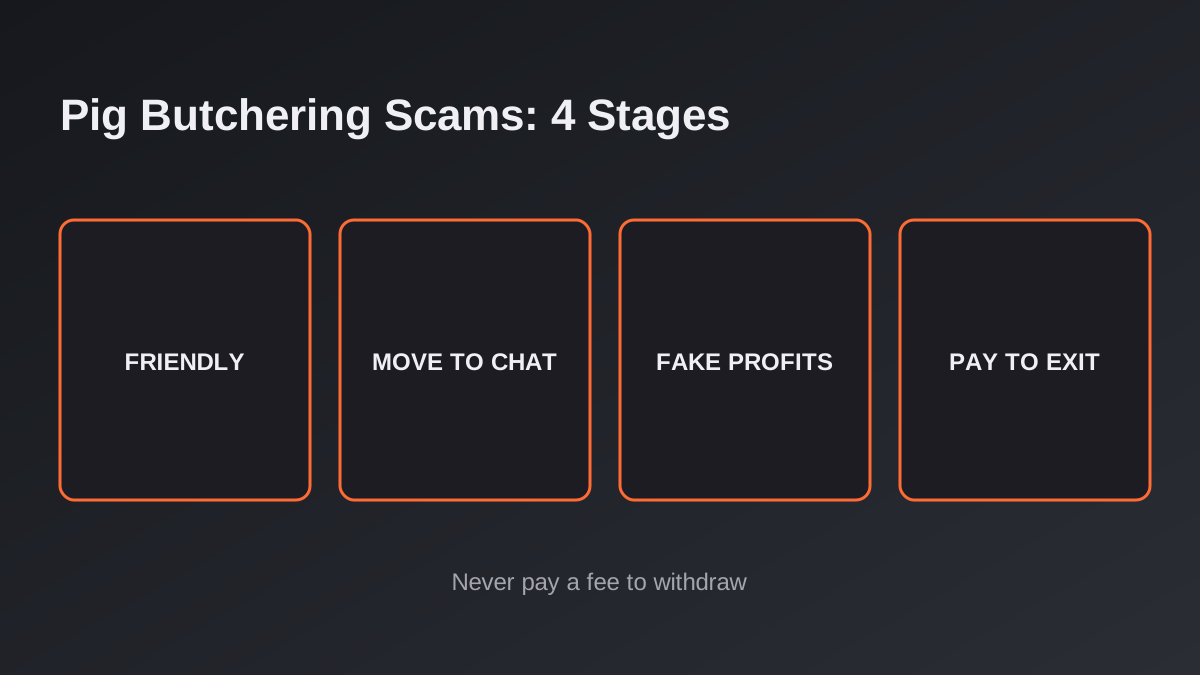
Do not delete the chat, confront the promoter, or pay anyone who offers to "get your money back". Recovery scams routinely follow investment scams; our guide to the pig butchering pattern shows how the second scam works.
Where to report in the United States
- SEC. The SEC is the main federal regulator for stock manipulation. File through its tips and complaints page. Its 2013 alert, written with FINRA, also points investors there for possible securities fraud.
- FINRA. If a brokerage firm or one of its employees was involved, FINRA says it investigates complaints against brokerage firms and their employees and can fine, suspend or bar them. Use the complaint form on its Need Help page. FINRA also runs arbitration and mediation for disputes with brokerage firms.
- Your state securities regulator. Find yours through NASAA. State regulators handle local promoters and unregistered sellers.
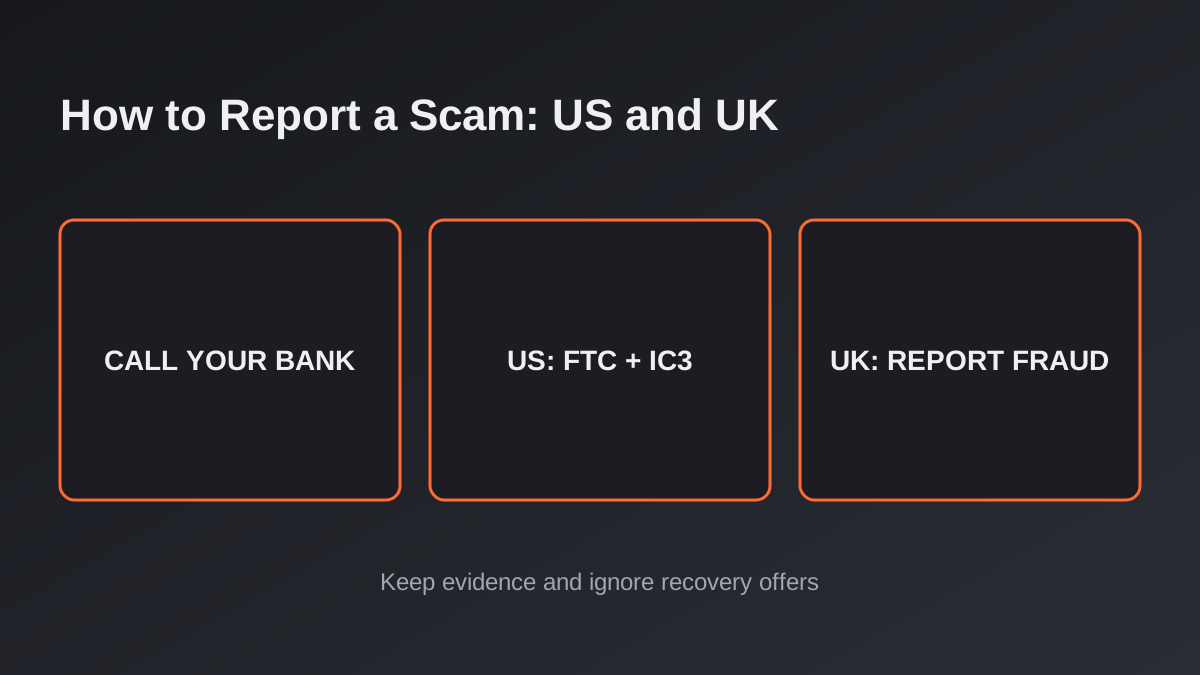
- FTC and FBI IC3. If the scheme ran through ads, social media or crypto, file at ReportFraud.ftc.gov and the FBI's Internet Crime Complaint Center. Our general scam reporting guide shows what each form asks for.
- CFTC. If the asset is a commodity or derivative, the CFTC accepts tips about violations of the Commodity Exchange Act. Its Submit a Tip page says tipsters who file Form TCR may be eligible for awards of up to 30% of money collected, and receive anti-retaliation protections where applicable.
- The platform. Report the group, channel, ad or profile inside WhatsApp, Telegram, Facebook, Instagram or X. It will not replace a regulator report, but it can stop the next person joining.
Where to report in the United Kingdom
- Financial Conduct Authority. The FCA's report a scam page covers investments you have been contacted about or have seen online, and unauthorised firms. Check a firm first with the FCA's Firm Checker.
- Report Fraud. Use reportfraud.police.uk for the police fraud report if you lost money.
- Your bank. If you made a payment or shared personal details, the FCA says to tell your bank straight away using the number on your card or statement.
Where to report in India
- SEBI SCORES. SCORES is SEBI's complaint system for grievances against listed companies, registered intermediaries and market infrastructure institutions. Its homepage says complaints "in the nature of market intelligence" are not treated as complaints, so use it when a regulated entity is involved.
- Cyber crime portal. For an anonymous online group, report the fraud at cybercrime.gov.in.
What happens after you report, and what does not
Do not expect a personal reply or a promised outcome. Regulators use reports to spot patterns across many victims and decide where to investigate. A report does not recover your money by itself, and no agency listed here charges a fee to take it. If you want to try to recover losses, your options are your brokerage firm (and FINRA's dispute resolution if a firm is involved), your state regulator, or a licensed securities attorney. If you hold genuine inside information about who ran the scheme, the SEC and CFTC whistleblower programs exist for that; our guide to the DOJ fraud whistleblower program explains how such rewards work in practice.
While you wait, do not buy more of the stock on the promoter's say-so, and do not assume the next message in the group is a rescue. Block and report, then check any "adviser" on Investor.gov before you talk to them. If the tips came with a cloned voice or video of a celebrity, see our guide to deepfake scams.
FAQ
Is it illegal to buy a stock that is being promoted?
Buying is not the problem. The concern, as the SEC frames it, is false or misleading statements used to push the price up so insiders can sell. If you bought on a promoter's claims, you are the victim of the scheme, not its author.
Is a pump and dump the same as a Ponzi scheme?
No. A pump and dump manipulates a market price and the fraudsters profit by selling their shares into the demand. A Ponzi scheme pays earlier investors with later investors' money. Our Ponzi vs pyramid explainer covers that difference.
Should I report to the SEC or FINRA?
If you are unsure, SEC first: it covers the market-wide manipulation. Add FINRA if a registered brokerage firm or employee took part, and your state regulator for local promoters. Filing with more than one is fine.
Can I report anonymously?
Some channels accept anonymous tips, such as the CFTC's Form TCR, according to its tips page. Anonymous reports are harder to follow up, so include as much evidence as you can.
Where to report, in one line
US: SEC (plus FINRA, your state regulator, FTC or IC3). UK: FCA and Report Fraud, and tell your bank. India: SEBI SCORES and cybercrime.gov.in.
Sources
- SEC Investor.gov: Pump and Dump Schemes; Social Media and Stock Tip Scams - Investor Alert (6 February 2026); Investor Alert: Don’t Trade on Pump-And-Dump Stock Emails (SEC and FINRA, 2013)
- FINRA: Need Help? File a complaint
- CFTC: Submit a Tip
- NASAA: Contact your regulator
- Financial Conduct Authority (UK): Report a scam
- SEBI: SCORES, SEBI Complaint Redressal System
- NDTV Profit: ED freezes Rs 200 crore in SEBI-flagged WhatsApp pump-and-dump scheme (21 October 2026; allegations, no findings of guilt)
- FTC: ReportFraud.ftc.gov; FBI: IC3; UK police: Report Fraud; India: National Cyber Crime Reporting Portal (all checked 28 October 2026)
This article is general consumer-awareness information, not legal or financial advice. Figures and claims are as reported by the agencies cited; check the official sites above before you act. Allegations mentioned are unproven.