How to Report a Scam in the US and UK: FTC, IC3 and Report Fraud
Where to report a scam in the US and UK: FTC, FBI IC3, Report Fraud (formerly Action Fraud), 7726 and the FCA, plus what to do first and what to include.
On this page
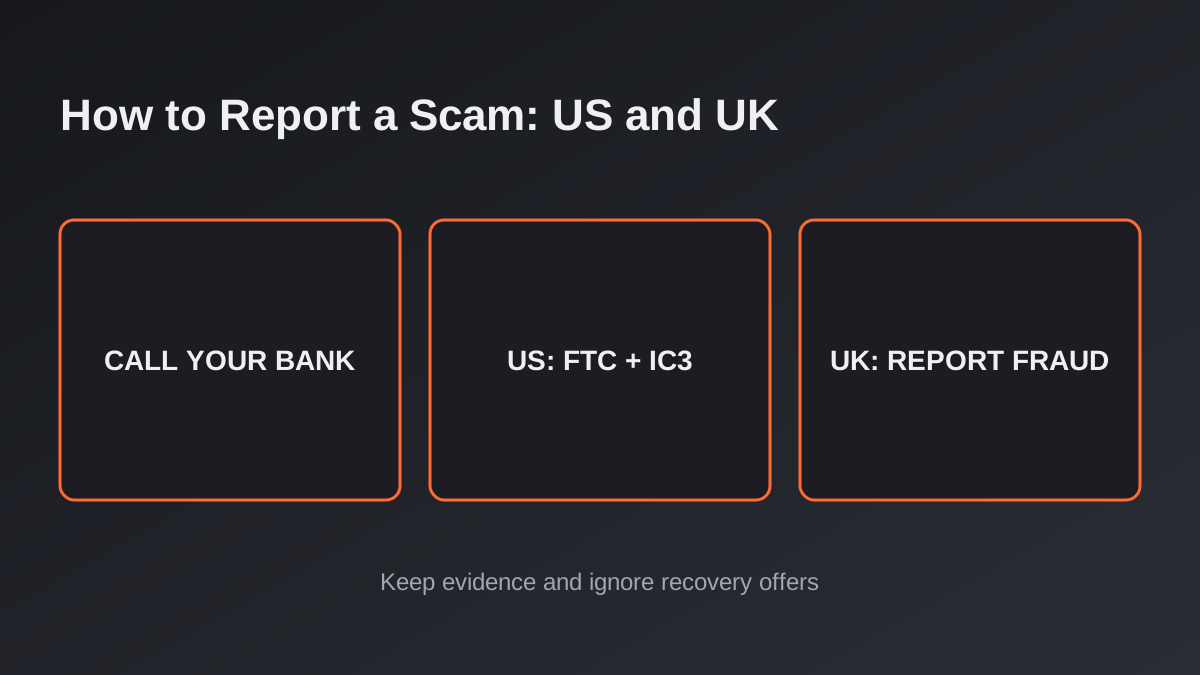
The short answer: in the US, report most scams to the Federal Trade Commission at ReportFraud.ftc.gov and anything that happened online to the FBI's Internet Crime Complaint Center at ic3.gov. In England, Wales and Northern Ireland, report to Report Fraud (the police service that replaced Action Fraud) at reportfraud.police.uk or on 0300 123 2040; in Scotland, call Police Scotland on 101. If you have lost money, call your bank or payment provider first, because speed is what gives you a chance of getting it back.
Knowing where to send a report matters more than ever because scammers now pretend to be the very agencies you would report to. On 15 October 2026 the City of London Police, which runs Report Fraud, issued an alert that criminals are calling people from "spoofed" numbers that look like real police forces. The FTC, the FBI's IC3 and the UK's Financial Conduct Authority all carry similar warnings on their own sites. This guide lists the official channels, explains which one fits which scam, and shows what to put in a report so it is actually useful.
This is a general awareness guide based on the official US and UK reporting services listed in the sources. It is not legal or financial advice. If anyone is in immediate danger, call 911 in the US or 999 in the UK.
Do these three things first
Reporting to an agency helps investigators spot patterns, but it rarely gets your money back on its own. Before you fill in any form:
- Contact the company you paid with. The FTC's advice is the same for nearly every payment method: report it to your bank, card issuer, payment app (such as Zelle, Venmo, Cash App or PayPal), wire transfer company, gift card issuer or crypto exchange immediately, tell them it was a scam, and ask them to reverse the payment. In the UK you can call 159, a short number that connects you to your own bank and, according to Stop Scams UK, cannot be spoofed.
- Lock down what the scammer touched. Change passwords for any account you shared, turn on two-step verification, and if you gave out a Social Security number in the US, go to IdentityTheft.gov for a recovery plan.
- Keep the evidence. Do not delete the messages. Take screenshots of chats, profiles and websites, and save receipts, transaction IDs, wallet addresses and phone numbers.
Where to report a scam in the US
There is no single US scam hotline, but two federal intake points cover most cases, and you can file with both.
- Federal Trade Commission: ReportFraud.ftc.gov. The default place for scams, bad business practices and unwanted calls. The FTC says reports go into its Consumer Sentinel database and are shared with more than 2,000 law enforcers. It is honest about the limit: it does not resolve individual reports.
- FBI Internet Crime Complaint Center: ic3.gov. The FBI's central hub for cyber-enabled crime: online investment fraud, business email compromise, crypto scams, sextortion and tech-support scams. The IC3 says to file even if you are unsure whether your case qualifies, and that it cannot guarantee a response to every complaint.
- Identity theft: IdentityTheft.gov. Use this if someone used your personal details to open accounts or file in your name.
- Investment fraud: SEC tips and complaints. For suspected securities fraud, Ponzi schemes, insider trading or market manipulation.
- Bank, card, loan or money-transfer problems: CFPB complaint portal. The Consumer Financial Protection Bureau takes complaints about accounts, credit cards, money transfers and virtual currency, and forwards them to the company for a response.
- Mail fraud: US Postal Inspection Service. For scams that used the mail. If you mailed cash to a scammer, the FTC says to call USPIS at 1-877-876-2455 straight away; for a fee, a package that has not been delivered can sometimes be intercepted.
- Your state attorney general and local police. A police report number is often what a bank asks for when you dispute a payment.
Not sure which one fits? USA.gov has a short "where to report a scam" tool that asks where the scam happened and points you to the right agency in a minute or two.
Where to report a scam in the UK
- Report Fraud: reportfraud.police.uk or 0300 123 2040. The national fraud and cyber crime reporting service for England, Wales and Northern Ireland, run by the City of London Police. It says it serves the 4.6 million people affected by cyber crime and fraud each year, and it also points victims to support from groups such as Victim Support and Age UK.
- Scotland: report to Police Scotland on 101. The FCA also lists Advice Direct Scotland on 0808 164 6000.
- Scam emails: forward them to the National Cyber Security Centre at report@phishing.gov.uk. The NCSC says it acts on every message and can have malicious sites taken down, although it cannot tell you the outcome.
- Scam texts: forward them free to 7726 so your mobile provider can investigate and block the sender.
- Scam websites: report them through the NCSC's suspicious website page.
- Investment, pension, loan or insurance scams: the Financial Conduct Authority. The FCA asks you to report to Report Fraud first if you lost money, then to the FCA. It cannot help with HMRC, TV licence, lottery or online marketplace seller scams; those go to Report Fraud or the relevant organisation.
One UK detail worth knowing: under rules set by the Payment Systems Regulator, most victims of authorised push payment (APP) scams, where you were tricked into sending a bank transfer yourself, can claim reimbursement from their payment provider, up to £85,000 per claim. That claim goes to your bank, not to the police, which is another reason to call the bank first.
Outside the US and UK
In Canada, report to your local police and to the Canadian Anti-Fraud Centre at reportcyberandfraud.canada.ca or 1-888-495-8501. In Australia, use the Scamwatch report form, and contact your bank at once if money or card details were taken.
Which agency fits which scam?
- Fake online shop, imposter call or "you've won" message: FTC (US) or Report Fraud (UK).
- Crypto "investment" that started on a dating app or with a wrong-number text: IC3 and FTC in the US; Report Fraud and the FCA in the UK. Our explainer on Ponzi schemes versus pyramid schemes covers the warning signs of fake returns.
- Cloned voice or fake video call from a "boss" or relative: IC3 or Report Fraud, plus your bank. See our guide to deepfake scams.
- Stock or token hyped up before a crash: SEC in the US, FCA in the UK. Background: how crypto markets get manipulated.
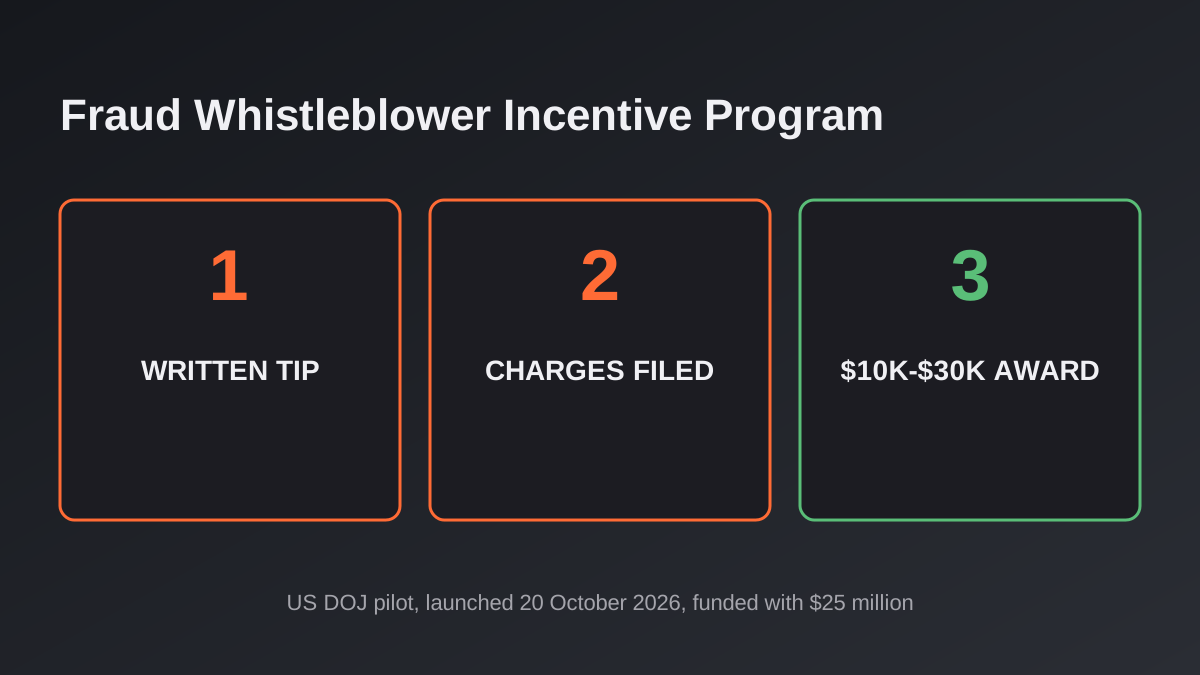
- Fraud against a government programme or contractor: that is a whistleblower matter rather than a consumer complaint; see our explainer on the DOJ fraud whistleblower incentive program.
What to put in your report
Investigators link cases through small details, so a short factual report with identifiers beats a long story without them. Include:
- dates and times of each contact, and how it happened (call, text, email, app, website or social media);
- every phone number, email address, username, profile link and website URL the scammer used;
- how much you paid, when and how, with transaction IDs, bank details or crypto wallet addresses and transaction hashes;
- the names, company names or "case numbers" they gave you, even if you think they were fake;
- copies of the evidence you saved, and the reference number from any earlier report.
Keep the reference number you get back. Your bank, card issuer or insurer may ask for it, and it lets you add new information to the same case instead of starting again.
Beware the second scam: fake "recovery" help
People who report a loss are often targeted again by someone claiming they can get the money back for a fee. The official services are blunt about this. The IC3 says it does not work with any non-law-enforcement entity, such as law firms or crypto services, to recover funds, and that it will never contact you directly for information or money. The FTC says it will never threaten you, tell you to move money to "protect it," or ask you to withdraw cash or buy gold. The FCA says it will never ask you to transfer money or ask for your bank PINs and passwords.
The rule that follows: you make the contact. Type the agency's address yourself or call a number from your card or the official site, and treat any unexpected call from "the police," "the FBI" or "your bank's fraud team" as suspect until you have hung up and called back on a number you trust.
FAQ
Is it worth reporting a scam if I did not lose money?
Yes. The FTC, IC3 and NCSC all use reports of attempted scams to spot new patterns, block senders and take down websites. Forwarding a scam text to 7726 or an email to report@phishing.gov.uk takes seconds.
Will the FTC or IC3 get my money back?
Usually not directly. The FTC does not resolve individual reports, and the IC3 cannot guarantee a response. Your best chance of a refund is your bank or payment provider, contacted as quickly as possible.
Is Action Fraud still the place to report in the UK?
The service is now called Report Fraud, at reportfraud.police.uk, and the number is 0300 123 2040. It covers England, Wales and Northern Ireland; people in Scotland report to Police Scotland on 101.
Should I report to more than one agency?
Often, yes. In the US it is common to file with both the FTC and the IC3, and to add the SEC for investment fraud. In the UK, investment scams go to Report Fraud and then the FCA.
Sources
- US Federal Trade Commission: What To Do if You Were Scammed; ReportFraud.ftc.gov (checked 25 October 2026)
- FBI Internet Crime Complaint Center: ic3.gov (checked 25 October 2026)
- USAGov: Where to report a scam; SEC: Submit a tip or complaint; CFPB: Submit a complaint
- Report Fraud (City of London Police): reportfraud.police.uk; City of London Police, "Report Fraud alert: Police forces being impersonated in scam calls using spoofed phone numbers" (15 October 2026)
- National Cyber Security Centre: Report a scam email; Report a scam text message
- Financial Conduct Authority: Report a scam (last updated 19 January 2026); Payment Systems Regulator: APP scams; Stop Scams UK: 159 phone number
- Canadian Anti-Fraud Centre: Report fraud and cybercrime; Scamwatch (ACCC): Report a scam
This article is general consumer-awareness information, not legal or financial advice. Reporting channels and phone numbers can change; check the official sites above before you act.