Deepfake Scams: How AI Voice and Video Fraud Works and How to Spot It
Deepfake scams clone a trusted voice or face to rush you into paying. INTERPOL's new campaign, the red flags to watch and how to verify before you act.
On this page
The short answer: a deepfake scam uses AI-generated or AI-altered audio, video or images to impersonate someone you trust, such as a boss, a relative or a romantic partner, and push you into sending money or sensitive information. You usually cannot reliably spot a good deepfake by looking or listening. The defence that works is procedural: slow down, hang up, and verify the request through a channel you already know is genuine, such as a phone number you have saved yourself or a family safe word.
That advice is now the centre of a global police campaign. On 19 October 2026 INTERPOL launched a public awareness campaign on AI deepfake scams, built around three short videos that are themselves AI-generated, and a simple message: Wait. Validate. Don't take the bait. Below we explain how these scams work, the red flags official agencies list, what to do if a call or video feels wrong, and where to report in the US, India and the UK.
This is a general awareness explainer based on guidance from INTERPOL, the FBI and the US Federal Trade Commission. It is not legal or financial advice. If you have already paid, contact your bank first, then the police.
What INTERPOL announced
INTERPOL's campaign, run from its Innovation Centre in Singapore, warns that generative AI tools no longer need much skill or money to use, and can now reproduce a real person's face or voice from a small amount of content found online. It says public understanding of how deepfakes are used in crime remains low, and that the target has shifted: synthetic media crime "once seen as a threat mainly to public figures" now increasingly targets private citizens through investment scams, impersonation, romance scams, sextortion and disinformation.
Toshinobu Yasuhira, Director of the INTERPOL Innovation Centre, put the core problem plainly: "AI is erasing the tell-tale signs of a scam. Spelling mistakes, branding inconsistencies, clumsy formatting: these red flags are fast becoming a thing of the past." The campaign is the public-facing part of INTERPOL's Project SynthWave PLUS, which supports police in Southeast Asia and beyond on synthetic media threats.
How deepfake scams actually work
Most deepfake scams are old frauds with a new disguise. The script is familiar: an emergency, a secret, a payment that has to happen now. What AI changes is how convincing the messenger looks and sounds. The FBI warned in a December 2024 public service announcement that criminals use generative AI to commit fraud "on a larger scale", and that these tools can correct the human errors that used to give scams away.
The common patterns are:
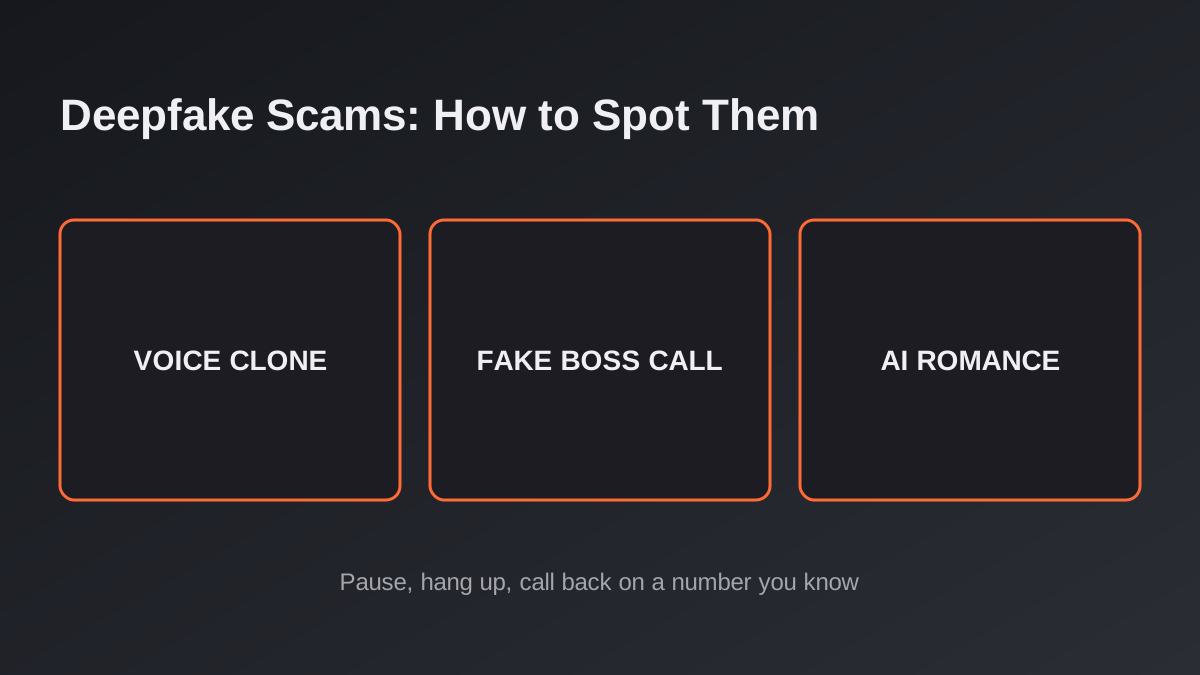
- The cloned family voice. You get a call from what sounds exactly like your child or grandchild: an accident, an arrest, a hospital bill. The US Federal Trade Commission explains that a scammer only needs a short audio clip of the person's voice, which can come from content posted online, and a voice-cloning program.
- The fake boss on a video call. An employee is asked to join a video meeting with a senior executive who urgently needs a confidential transfer. In the best-known case, engineering firm Arup confirmed in 2024 that a Hong Kong finance employee paid out about US$25 million after a video call in which the "chief financial officer" and other colleagues were deepfake re-creations, according to Hong Kong police and CNN.
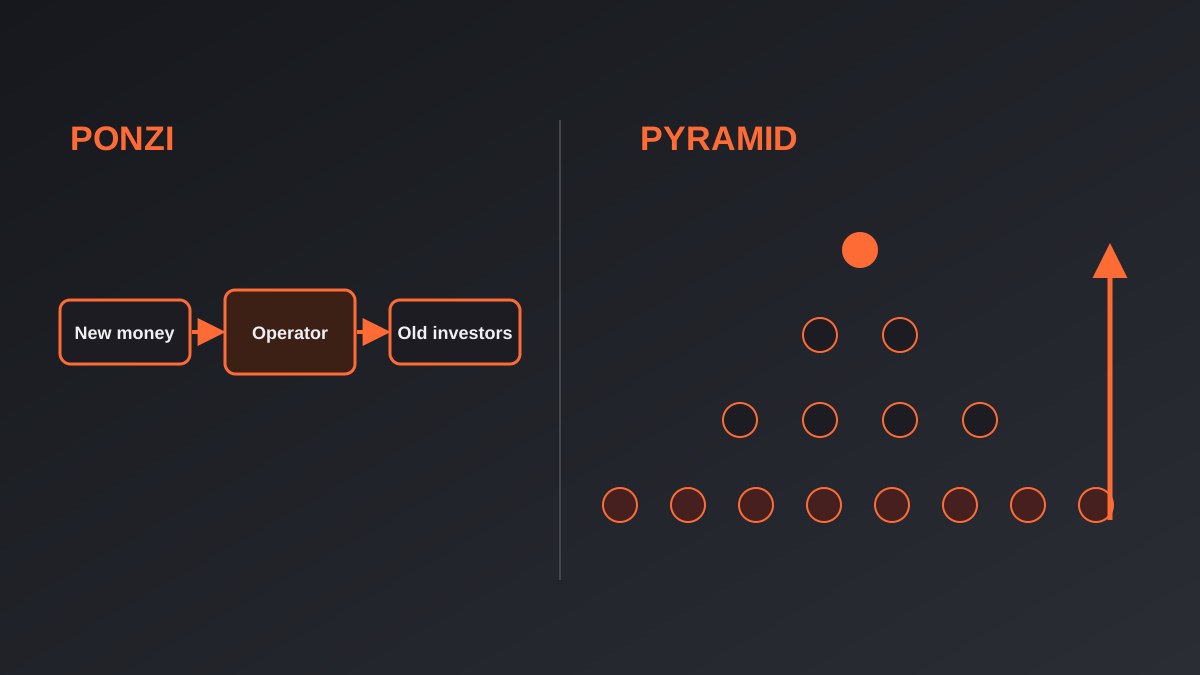
- The AI romance or investment contact. A friendly stranger with realistic photos, fluent messages and sometimes live video builds trust over weeks, then introduces an investment platform or a crisis that needs money. This is where deepfakes meet classic schemes such as Ponzi and pyramid schemes and crypto market manipulation.
- The fake celebrity or official endorsement. AI-made images or videos of well-known people "promoting" a product, giveaway or trading app. The FBI lists this alongside fake identity documents and AI-generated images of disasters used to solicit donations to fraudulent charities.
- Sextortion. Fabricated explicit images of a real person used to demand payment. INTERPOL lists sextortion and deepfake pornography among the ways synthetic media is now used against private individuals.
The red flags to look for
Because the face and voice may be flawless, the reliable warning signs are in the situation, not the pixels. INTERPOL's list is worth memorising:
- Unsolicited contact. Someone reaches out unprompted, even someone claiming to be a friend, relative or trusted organisation, and steers the conversation towards personal details, banking information or money.
- Urgency. You are pressured to act immediately, often because of a crisis or family emergency, so there is no time to check.
- Emotional manipulation. Fear, distress or a demand for secrecy, designed to stop you asking anyone else.
- Unusual payment methods. Wire transfers, cryptocurrency or gift cards, which are hard to trace and, as INTERPOL notes, nearly impossible to recover.
- A fast-moving online relationship. Intense declarations of love early on, and pressure to move off the dating platform where the conversation can be monitored and reported.
Technical glitches can still help when they appear. The FBI suggests looking for subtle imperfections in images and video, such as distorted hands, unrealistic teeth or eyes, or irregular faces, and listening closely to tone and word choice on calls. Treat those as a bonus, not a test you can rely on: the absence of glitches proves nothing.
What to do when a call or video feels wrong
The single most useful habit is to break the channel. Do not verify a request inside the same call, chat or video meeting it arrived in, because the scammer controls that channel.
- Pause. A real emergency survives a five-minute check. INTERPOL's first piece of advice is to stay calm and sceptical, even if you believe you are speaking to someone you trust, and to talk to people around you.
- Hang up and call back on a number you already have. The FTC's advice for a suspicious family call is direct: don't trust the voice; call the person on a phone number you know is theirs, or reach them through another relative or friend. For a bank or company, look up the official number yourself.
- Use a family safe word. Agree a secret word or question with close family and friends now, before you need it. Both INTERPOL and the FBI recommend this, and it defeats a voice clone instantly because the clone does not know the answer.
- Never pay in hard-to-reverse ways under pressure. Any request for gift cards, crypto or an urgent wire to a new account should stop the conversation.
- Reduce what can be cloned. The FBI suggests limiting public images and voice recordings where possible, setting social media accounts to private and limiting followers to people you know. Turn on two-factor authentication on every account that offers it.
Extra rules for businesses
Finance and HR teams are prime targets for the "fake boss" version. INTERPOL advises organisations to train staff on deepfakes, vishing (voice phishing) and social engineering, to require multi-step verification for payments and data transfers, including face-to-face confirmation for large sums, and to keep software updated. In practice that means no payment is ever approved on the strength of a call or video alone, however senior the person appears to be. Clear escalation channels also matter: staff who feel safe questioning a "CEO" are harder to fool, a point we return to in our explainer on how fraud tip and reward programmes work.
If you have already paid or shared details
Speed matters most with money. INTERPOL's advice is to contact your bank as soon as possible if you have recently made a payment, and to contact your local police. Then report it to the national channel so the case can be linked to others:
- United States: the FBI's Internet Crime Complaint Center at ic3.gov, and the FTC at ReportFraud.ftc.gov. The FBI asks for payment details such as dates, amounts, account numbers and any cryptocurrency addresses, plus how the contact started.
- India: call the national cyber fraud helpline 1930 or file a complaint on the National Cyber Crime Reporting Portal, cybercrime.gov.in.
- United Kingdom: Report Fraud (reportfraud.police.uk, the service that replaced Action Fraud) for England, Wales and Northern Ireland; in Scotland, report to Police Scotland on 101.
Keep screenshots, call logs, phone numbers, usernames and transaction references. Change passwords on any account you mentioned and warn the person who was impersonated, because they may be used again against their other contacts.
Why this matters beyond individual losses
Deepfakes erode a basic tool of accountability: the ability to trust what we see and hear. The same technology that fakes a grandson's voice can fake an official's statement or a piece of evidence, and it gives genuine wrongdoers a ready excuse to dismiss real recordings as "AI". That is why verification habits, clear payment controls and open reporting channels matter as much as detection software. None of them depend on spotting the fake.
Frequently asked questions
Can you tell a deepfake voice from a real one?
Sometimes, but not reliably. Short phone calls, background noise and panic all hide the flaws. Assume a familiar voice can be faked and verify through a known number or a safe word instead.
How much audio does a scammer need to clone a voice?
Not much. The FTC says a short audio clip, for example from a video posted online, can be enough for a voice-cloning program. INTERPOL also notes that a small amount of online content can reproduce someone's face or voice.
Is making a deepfake illegal?
Creating synthetic media is not automatically illegal, as the FBI points out, but using it to commit fraud, extortion or impersonation is a crime under existing fraud laws in the US, India and the UK.
What is the best single protection?
A habit, not a tool: never act on an urgent money request until you have verified it outside the original call or chat.
Sources
- INTERPOL: INTERPOL launches public awareness campaign highlighting risk of AI deepfake scams (19 October 2026)
- FBI Internet Crime Complaint Center: Criminals Use Generative Artificial Intelligence to Facilitate Financial Fraud (PSA, 3 December 2024)
- US Federal Trade Commission: Scammers use AI to enhance their family emergency schemes (20 March 2023)
- CNN: British engineering giant Arup revealed as $25 million deepfake scam victim (16 May 2024)
- Report Fraud (UK): reportfraud.police.uk; India National Cyber Crime Reporting Portal: cybercrime.gov.in
This article is general consumer-awareness information, not legal or financial advice. Reporting channels can change; check the official sites above before you act.